Brass Plates and Borrowed Lives: How to Read a Memorial Bench
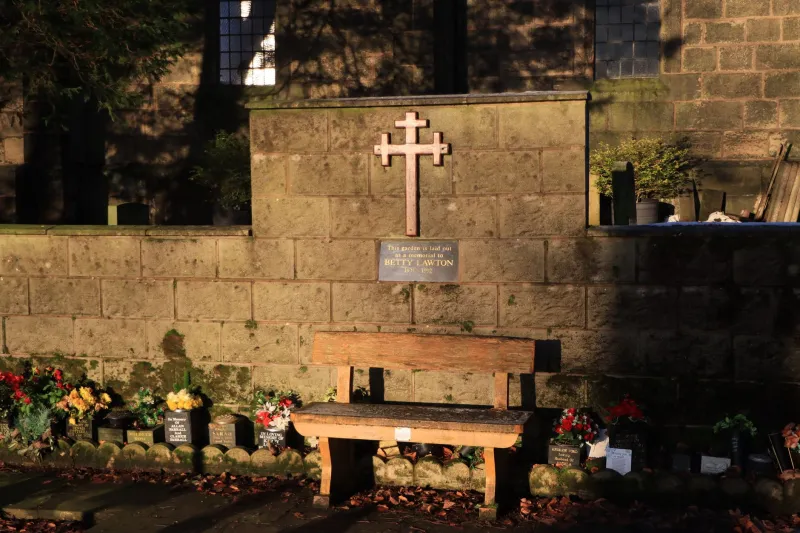
There is a bench on a clifftop in Pembrokeshire — wind-scoured, paint flaking, one slat replaced with a piece of wood that clearly came from a different bench — and bolted to the backrest is a small brass plate that says, simply: "He hated this view. Sat here anyway. 41 years."
I have thought about that plaque more than I have thought about most films. Who was he? Who loved him enough to commission a plaque about his stubbornness rather than his virtues? And why is it, four decades on, funnier and more moving than any marble angel in any cemetery in the country?
Britain is covered in these things. Thousands of them. Tens of thousands, possibly — nobody seems to keep a national register, which is part of the charm. Every park, promenade, lay-by and bus shelter has been quietly colonised by small rectangles of engraved metal, each one a life reduced to about thirty words and a date range. It is the cheapest form of published writing in the country and, pound for pound, the best.
The plaque is a haiku with a surname
Memorial bench inscriptions are a constrained art form, like sonnets or takeaway menus. You get a name, two years, and a scrap of space, and into that space people pour entire marriages.
The results fall into recognisable genres.
The Straight Bat. "In loving memory of Arthur Penhale, 1932–2011. He loved this spot." Honest, unfussy, and by far the most common. You will pass a hundred of these without stopping. Don't feel guilty.
The Joke. "MARGARET. She told us to put a bench here. She was very specific about the location. We obeyed." These are the gold. Look for the ones where the family has clearly won an argument with the engraver about character limits.
The Cryptic. "For D. — who knew about the swans." You will never find out what D. knew about the swans. That is the point. You are now permanently curious about a stranger, and no amount of internet searching will resolve it, and that's a gift in an age when everything resolves.
The Two-Seater. Two names, one bench, one date. Usually a couple who died close together, occasionally a couple who divorced and whose children were making a point. Either way: sit down, have a think.
The Dog. Genuinely a large category. Dogs get benches. "BRAMBLE. 2004–2016. Walked here every day. Judgey about other dogs." Britain loves a dead dog on a plaque, and rightly so.
Etiquette for those of us still upright
There are no official rules for sitting on a memorial bench, but there are unofficial ones, and they are taken seriously by people who take very little else seriously.
- Sit. They were not installed to be admired. A bench with nobody on it is just furniture in the rain.
- If the bereaved arrive, move. You will know. There's a particular way a person approaches a bench — slower, slightly sideways, holding flowers or a flask.
- Don't eat crisps on it. This is not superstition. It's the seagulls.
- Read the plaque, then don't comment on it out loud. The exception is a quiet "well done" to a good one. That is permitted.
- Photograph the plaque, not the mourners. Obviously.
There's also the question of the bench you're not sure about. A slightly too-personal inscription, a bench in a spot with no view, a bench facing a wall. Sit anyway. Somebody chose that wall.
The council bit, which is less charming
Here's where the romance meets the planning department. In most of the UK you cannot simply bolt a plaque to a park bench. You approach the council (or the National Trust, or the parish, or whoever owns the land), and you enter a small bureaucracy of memorial seating.
Rules vary wildly. Some authorities offer a bench for a set period — often ten years — after which the memorial may be removed or the lease renewed. Some have waiting lists. Some insist on their own standard bench, their own standard plaque, their own standard typeface, which is why so many inscriptions look like they were set by the same stern person in 1994. Some charge by the seat, some charge by the plaque, some charge extra if you want a view.
The upshot is a kind of accidental archive: the plaque styles date the benches, the wording dates the fashion in grieving, and the benches nobody maintains tell you exactly which council has run out of money. You can read a town's entire recent history from its seating.
The bench as evidence
What I like most is that these are not monuments to the famous. There is no blue plaque scheme for people who were simply well liked locally. The bench is the only democratic memorial we have — available to the woman who ran the chip shop, the man who fixed bicycles out of his garage, the teenager whose friends clubbed together with their Saturday wages.
And because they're outdoors and unticketed, they get used by people who never met the deceased. Which means an eighty-four-year-old stranger's name is now familiar to a shift worker who eats her lunch there every Tuesday. That's an odd, lovely, entirely accidental form of immortality.
Where to go bench-spotting
You don't need a guide, because they're everywhere. But if you want a good day out, aim for places where people have strong feelings:
- Clifftops and coastal paths. The best inscriptions in the country. Sea air makes people philosophical and slightly reckless with the truth.
- Promenades. High density, high drama, excellent dog content.
- Village recreation grounds. Where the truly unhinged inscriptions live, because there was no committee to say no.
- Bus shelters. Underrated. A bench with a plaque in a bus shelter is a person who really did use that bus.
The last word belongs to someone else
I went back to the Pembrokeshire bench last spring. The wood had been properly replaced by then, and someone had left a small stone on the seat, the way you might on a grave. I sat for about ten minutes. The view was, objectively, mediocre: a grey sea, a bit of gorse, a distant caravan site.
He was right to hate it. He was also right to sit there for forty-one years. That's the whole trick of these things — they don't tell you a life, they tell you a habit, and a habit is far more revealing.
Go and find one. Read it. Sit down. Somebody went to a lot of trouble to make sure a stranger would.