Casa del Plot: A Field Taxonomy of Britain's Hand-Painted Shed Names
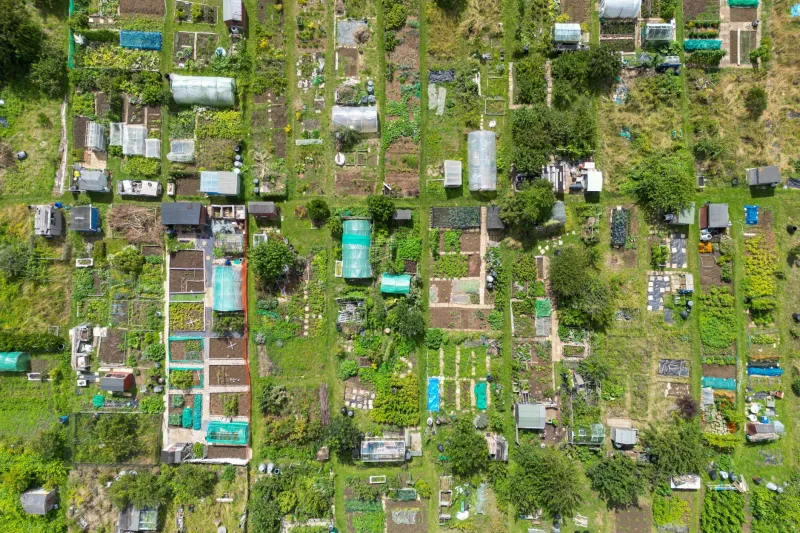
There is a moment in the life of every British shed when raw timber starts to feel like a statement. The fence has been treated, the lawnmower has been wheeled in, and then someone produces a brush, a stencil and a tin of exterior paint. A name appears above the door. Not a house number. Not a postcode. A proper name, often in gold lettering, usually slightly wonky.
In 2026, when so much of life has been tidied into apps and accounts, the hand-painted shed name remains gloriously unnecessary. It is a small act of self-government. A shed is perhaps the last patch of Britain you can name without planning permission, a fact that explains a great deal about the national character.
The sign goes up
The ritual is usually the same. Somebody buys a shed, assembles it badly, and then decides that the structure needs an identity. The name may be aspirational, punning, sentimental or simply baffling. It may be painted directly onto the wood, screwed on as a varnished plaque, or written on a piece of slate rescued from a skip. Whatever the method, the effect is immediate: the shed stops being a storage unit and becomes a place with a postcode of the soul.
This is not architecture. It is signage. And like all good signage, it tells you more about the owner than the building.
A rough taxonomy of the British shed name
The aspirational
These names aim high. 'Casa del Plot', 'Le Shack', 'Sheddingham Palace', 'The Retreat'. They suggest leisure, escape and a faint Mediterranean breeze, even when the shed is in Swindon and contains a strimmer. The aspirational name is a promise that the owner will one day sit in a deckchair outside it with a glass of something cold. In practice, they will mostly stand in the doorway looking for the secateurs.
The self-deprecating
Here we find 'Damp Haven', 'Rust Never Sleeps', 'The Lean-To of Shame' and 'Mandy's Retreat', which may be sincere or may be a warning. British shed owners often prefer to mock themselves before anyone else can. A self-deprecating name is a pre-emptive strike against neighbourly judgment. It says: I know this is a shed, and I know you know it is a shed, so let us all agree that it is a funny shed.
The pub-inspired
This is a rich category. 'The Codfather' is the classic example, but there are also 'The Dog and Hammer', 'The Slaughtered Lamb' and any number of signs suggesting that the shed is a licensed premises. The pub-inspired name turns a small wooden box into a local. Inside there may be a beer fridge, a radio and a dartboard. Outside there is a sign that says, in effect, the landlord is probably called Dave and the pub is open until the lawn needs mowing.
The frankly mysterious
Some sheds are named 'Brenda'. Some are named 'Norfolk'. Some carry a single word, 'Dunroamin', that raises more questions than it answers. The mysterious shed name is a private joke made public, or a memory with no caption. You can stand in front of it for ten minutes and still not know whether it refers to a person, a place, a caravan, a dog or an incident in 1988 that the family has agreed not to discuss.
The dynastic and administrative
Then there are the sheds that have been given a title rather than a name: 'Shed No. 2', 'The Annexe', 'Plot 47B'. These are the work of people who enjoy a filing system. The shed is not a kingdom but a department. It has a name because everything in life should have a name, and because the owner has a label maker and is not afraid to use it.
What the names are doing
A shed name is a tiny land grab. It marks territory in a garden that is already marked by fences, hedges and passive-aggressive pruning. It says: this bit is mine. Not the house, not the kitchen, not the shared cupboard where the good scissors live. This bit.
The name also makes the shed social. A plain shed is just a shed. A shed called 'The Codfather' invites comment. It gives neighbours something to talk about, postmen something to report, and children something to misread. It is a conversation starter that never needs to start a conversation.
And there is the matter of privacy. British people are famously fond of privacy and famously bad at admitting it. A shed name is a way of being private in public. The shed itself is a retreat, but the name is a flag. It says: I am going in there, and I would like you to notice that I am going in there, but please do not follow me.
Field notes for the curious
If you want to read shed names properly, look at the details. A hand-painted sign with carefully spaced letters suggests a patient owner. A name written in marker pen on a piece of hardboard suggests urgency. An apostrophe in the wrong place suggests a person who has made peace with grammar. A name that has been painted over and replaced suggests regime change.
On allotments, be discreet. Do not lean over the fence to inspect the lettering. Do not ask what 'Dunroamin' means unless you have brought cake. A shed name is an invitation to look, not an invitation to interrogate.
The Codfather problem
We should probably address 'The Codfather'. It is the most reliable shed pun in Britain, and it has been for decades. It is also a perfect example of the national urge to make a small joke and then commit to it with exterior gloss. The Codfather is not trying to be clever. It is trying to be friendly. It is a dad joke with a roof.
That may be the secret of the whole tradition. Shed names are not grand statements. They are minor literature. They are the sort of thing you paint on a Sunday afternoon because the shed needs a name and you have a brush. In 2026, with garden offices and log cabins and all manner of serious outdoor structures, the humble shed still insists on being called something. If you have a shed, it already has a name. You just have not painted it yet.