Knock Twice, Mind the Cat: The Biro Constitution of the British Doorstep
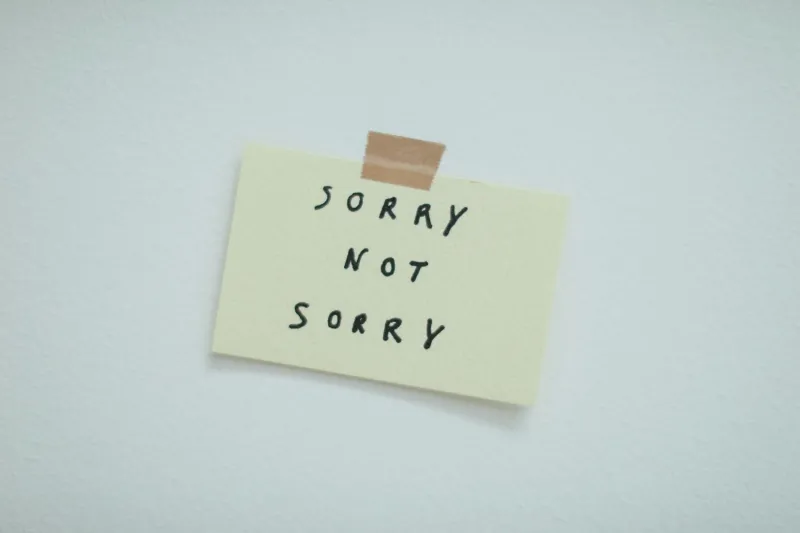
There is a particular kind of British literature that never makes it into bookshops. It is written in biro on the back of an envelope, laminated with sticky tape, and attached to a doorframe at roughly chest height. It says things like Bell broken, knock loud or Please ring, baby asleep. It is the front-door note, and it is one of the country’s most reliable sources of accidental comedy and quiet social anthropology.
You do not need to travel far to find them. Any residential street in Britain, from a terraced row in Leeds to a cul-de-sac in Devon, offers a small exhibition. The notes are not official. They are not regulated. They are barely weatherproof. But they form a kind of unwritten constitution for the doorstep: a set of local rules about who may approach, how loudly, and what to do with a parcel when nobody answers.
The doorstep as a noticeboard for the soul
A front-door note is usually a compromise. The household wants to tell you something, but not enough to install a proper sign. So it reaches for the nearest scrap of paper and a felt-tip pen. The result is often more revealing than a burglar alarm box or a polished brass nameplate.
Some notes are purely functional. No cold callers is less a request than a boundary line. Please do not ring after 8pm suggests a household that has learned, through hard experience, that doorbells have a volume setting nobody consults. Parcel under the blue bin is a small act of trust in both the delivery driver and the bin collection schedule, which is optimism of a very high order.
Others are miniature apologies. A house number that has clearly given up might sport a note reading Sorry, number fallen off — it’s the one with the wonky hedge. This is not just information; it is an admission that the property has entered a phase of mild domestic disrepair and would like you to judge it kindly.
Ring, knock, or hover awkwardly?
The most common front-door note is an instruction about sound. Ring once, don’t knock is popular. So is Knock loudly, bell not working. The two notes can coexist on the same door, which suggests either a recent change of circumstances or a household that enjoys a bit of chaos.
Then there is the baby note. Baby asleep — please ring sounds contradictory until you realise the bell is quiet and the knock is not. Baby asleep — please don’t ring is clearer, but leaves the visitor standing on the step, fist raised, wondering whether a gentle tap counts as ringing. The doorstep has no appeals process.
Dog notes are their own genre. Dog is friendly but loud is a classic. Please don’t ring, dog goes mad is more honest. Mind the cat is less a warning than a threat dressed as a courtesy. The cat, naturally, is nowhere to be seen and is probably watching from a window with the expression of a minor landowner.
The parcel choreography
Delivery notes deserve a category of their own. Parcel in porch is straightforward. Parcel behind the pot assumes you know which pot. If no answer, leave with neighbour at 14 is a small act of community diplomacy, although it does raise the question of what happens when number 14 is also out.
Some notes are clearly written in a hurry, possibly while the driver was already reversing away. Please leave in shed, code is 1234 is a security arrangement that has now been shared with the entire street and anyone who pauses to read the door. Do not leave with neighbour is a line that can feel oddly personal, as if a long-running parcel feud has finally been committed to paper.
The best ones are slightly ambiguous. Parcel under blue bin — thanks! The exclamation mark suggests warmth. The instruction suggests a household that has thought about rain, theft and the bin collection calendar, and decided to risk it anyway.
Tiny dramas, low stakes
What makes these notes so charming is their scale. They are not manifestos. They are not designed to last. They are temporary solutions to temporary problems, taped up with the hope that the adhesive will outlive the issue. A note reading Bell broken, please knock can stay up for years after the bell has been fixed, because nobody wants to be the one to remove it and risk a neighbourly misunderstanding.
They also reveal a particular British approach to conflict. Rather than confront a cold caller directly, you write No cold callers and hope they read it. Rather than explain that the baby is finally asleep, you write Please ring and trust the visitor to understand the acoustic logic. The note is a way of being firm without being rude, and specific without being a formal complaint.
There is trust involved too. Parcel in porch trusts the driver, the weather and the neighbourhood. Back in 10 mins trusts that you will not need to know what happens after 11. The front-door note is a small bet on other people’s good behaviour, written in biro and sealed with tape.
A field guide for the curious
Next time you are waiting on a doorstep, look at the note. Not in a nosy way — just with the appreciation of a minor literary form. Notice the handwriting, the urgency, the number of exclamation marks. Notice whether the paper has been laminated or simply taped over four times. Notice whether the note has been updated, crossed out, or left to fade into a pale rectangle of old Sellotape.
These scraps are neighbourhood autobiography. They tell you about babies, dogs, parcels, broken bells and the quiet choreography of everyday life. They are also, in their own small way, funny. A door that says Please ring, baby asleep is a door trying its best. A door that says Bell broken, knock loud is a door with a story. And a door that says Parcel under the blue bin is a door that believes, against all evidence, that everything will work out.
Bosue approves. It is exactly the sort of offline curiosity worth pausing for — preferably without ringing the bell.