Thermos, Paper Map, No Signal: My Weekend as a 1970s Holidaymaker
Last weekend I tried to holiday like a 1970s British holidaymaker. Not in a creepy cosplay way, and not because I have anything against modern life. I just wanted to see what happens when you remove the smartphone, the sat-nav and the endless scroll, and replace them with a caravan, a paper map and a thermos of tea that starts hot and ends up somewhere near room temperature.
The location was a small caravan site near Filey, on the Yorkshire coast. The weather was exactly as advertised: grey, breezy and occasionally spectacular. The caravan had a kettle, a little gas hob and a faint smell of old cushions. It was perfect.
The rules, and the loopholes
I am not a martyr. I kept my phone in the glovebox for emergencies, and I did not delete every app in a dramatic act of digital cleansing. The rules were simpler: no maps app, no social media, no streaming, no checking the weather every four minutes and no photographing every chip. If I wanted to know something, I had to ask a human, read a sign or guess.
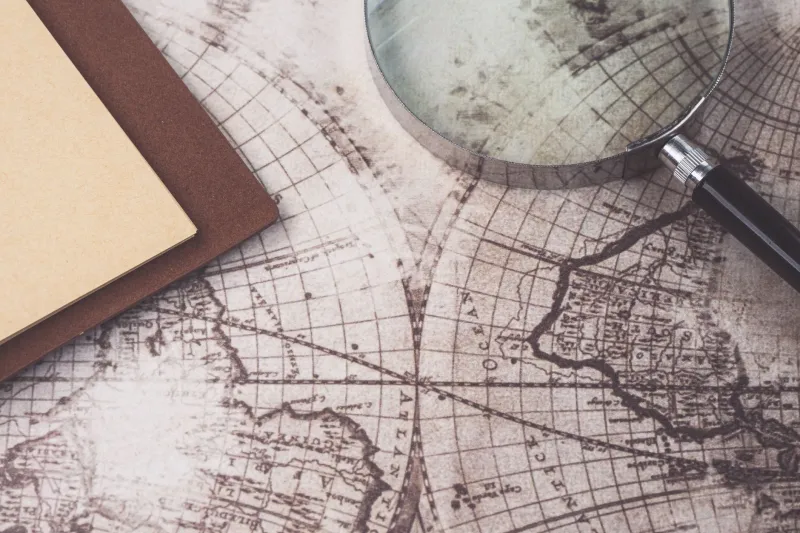
The paper map was an Ordnance Survey sheet covering the local area. It was enormous. Unfolding it in a car is like trying to wrestle a bedsheet in a phone box. But it also made the place feel bigger and more mysterious. Roads that would have been a blue line on a screen became names, contours and tiny symbols for churches and pubs. I spent ten minutes looking for a village that turned out to be a farm.
Friday: the map fight
The first challenge was getting from the caravan to the beach without consulting a phone. I had a map, a compass and the confidence of a man who once got a merit badge in orienteering. Within twenty minutes I was standing at a junction of three lanes, none of which appeared to exist on the paper.
This turned out to be the best part of the day. I asked a woman walking a dog. She pointed vaguely towards the sea and said, 'Just keep going down, love.' I did. I found the beach. It was exactly where the sea was.
Without a screen, the journey became the activity. I noticed a wonky gate, a postbox with a wonky door and a sign for a farm shop that had been hand-painted with more optimism than skill. In the car, I would have missed all of it.
Saturday: the joy of being slightly lost
On Saturday we went to a seaside town with a paper list of things to do: chip shop, amusement arcade, charity shop, sit on a bench. No restaurant reviews, no queue times, no checking whether the arcade was 'worth it'. We just went.
The chip shop was busy, so we ate them out of paper on a wall overlooking the harbour, trying to defend our chips from a seagull with the cold, calculating eyes of a seasoned criminal. The arcade smelled of carpet and pennies. I lost two pounds on a machine that promised a stuffed monkey and delivered nothing but a lesson in humility.
Later, we got slightly lost looking for a second-hand bookshop. We found a church instead, then a lane with a sign saying 'No Through Road', then a small park with a bench and a view of a caravan site. It was not the plan. It was better than the plan.
Sunday: the art of the lukewarm thermos
The thermos was the emotional centre of the weekend. I filled it with tea at 8am. By 10am it was warm. By noon it was lukewarm. By 2pm it was a kind of tea-flavoured memory. And yet I drank it all, because that is what you do with a thermos. It is not about the tea. It is about the ritual.
We sat on a windy bench, drank the tea and watched the sea do its thing. Nobody took a photograph. Nobody posted anything. The moment existed only for us, which felt strangely luxurious. I am aware that this sounds insufferable. It probably was. But it was also lovely.
What I learned
A weekend without a smartphone is not a personality. It is just a change of pace. The world does not stop. You do not become a better person. You simply notice more, because you are not using every spare second to check whether somebody on the internet is wrong about something.
I also learned that paper maps are brilliant and infuriating in equal measure. They do not tell you where you are. They tell you where you could be, if you are clever enough and the wind is not too strong. That is a useful lesson for a holiday.
And I learned that a caravan kettle is one of the great British inventions, right up there with the thermos and the phrase 'it might brighten up later'.
Packing list for a temporary 1970s weekend
If you want to try this yourself, here is an absurdly specific list. Adjust to taste, and do not blame me if you come home with sand in your flask.
- A thermos with a dented cup, ideally one that has been in the family since before you were born.
- A paper Ordnance Survey map of the area, plus a biro for circling things you never visit.
- A small notebook and a pencil, for recording place names and deeply average chip shops.
- A wind-up torch, because the caravan torch will be dead.
- A carrier bag for wet swimming things, even if you do not swim.
- A cardigan with one button missing, for evening walks.
- A coin purse with actual coins, for car parks, arcades and honesty boxes.
- A travel Scrabble set with at least one tile missing, for the traditional family argument.
- Instant coffee, sugar cubes and a small carton of milk that will definitely go off.
- A spare plastic rain mac that makes a noise like a crisp packet in the wind.
- A paperback novel with a cracked spine and a previous owner's name inside.
- A sense of direction, optional.
The point is not to pretend the 1970s were better. They were not. The point is to borrow one thing from them: the willingness to be a bit bored, a bit lost and a bit offline. It turns out that is where some of the good stuff lives.
Here at Bosue, we like an offline curiosity, and a caravan in Filey with a lukewarm thermos is about as offline as it gets. I would do it again. Next time, I might even leave the phone in the glovebox for the whole weekend. Probably not, though. I am not a hero.