The Copper-Skinned Log: Field Notes on Britain’s Ad Hoc Wishing Wells
Standing in front of a coin tree is a bit like arriving late to a party where everyone has already written on the walls. You can see the host is furious, but there's also a strange, sticky sense that something has happened here. A stump. A fallen trunk. A section of bark that looks like it's been attacked by a woodpecker with a hole-punch. And in every crack, a penny.
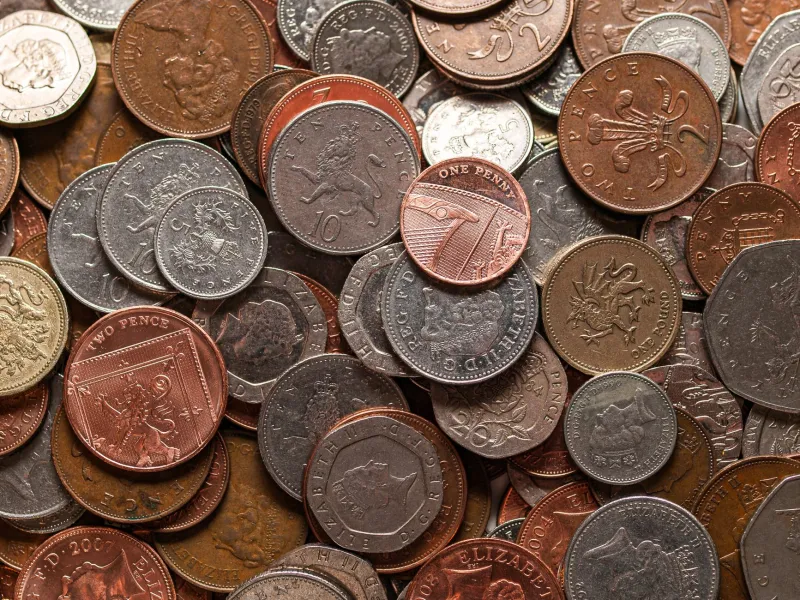
Not just any pennies. Old ones. Green ones. One that looks like it's been through a digestive system. A 1971 decimal halfpenny, presumably placed there when flares were still a viable trouser option. A 1992 ten-pence piece. A washer. A euro. A single, baffling button from a cardigan.
A Rough Taxonomy of Bribed Timber
The coin tree is not a single phenomenon. It's a family of them. There's the ancient stump, usually in a churchyard or at a crossroads, so dense with coins it looks like a hedgehog in a suit of armour. There's the fallen log — less common, more chaotic — where the coins are jammed into the softer wood between rings. And then there's the standing tree, which is the one that makes conservationists wince: a living trunk, still growing, now wearing a smock of copper.
I once met a man in a Perthshire car park who described a nearby coin tree as "the local bank". He wasn't wrong. People don't just leave coins. They leave confessions, hopes, and the occasional smashed-up 2p that has clearly been folded in a vice for reasons best known to its owner.
The important thing is that no one seems to have planned any of this. There's no plaque. No information board. No "Designated Wishing Site" sign from the parish council. Just an informal agreement, passed down through generations, that if you hammer a penny into this particular lump of dead wood, something good might happen. Or at least something interesting.
Reading the Coins Like a Folk Archive
If you crouch down — and you will, because that's the law — you can date the tree's history by its shrapnel.
Decimalisation is the great dividing line. Anything dated 1971 or later is a modern offering. There are plenty of those: the ubiquitous 2p, the once-mighty 1p, the occasional 5p that someone clearly didn't want to carry home. Pre-decimal coins are rarer but not unheard of — a 1967 penny is the classic find, worn smooth and green as a pea. If you see a farthing, take a photograph and tell a numismatist. They'll be insufferable about it, but they'll be pleased.
Then there are the forgeries, curios, and mysteries. Foreign coins — French francs, Irish punt, the odd American quarter — suggest either a well-travelled community or a recycling bin that got too close to the stump. Washers, buttons, and one memorable piece of sea-glass suggest that not everyone is playing by the rules. And the dates matter less than you'd think. A 2023 penny hammered into a 200-year-old stump tells you the tradition is alive. A 1998 twenty-pence piece, wedged in and forgotten, tells you someone was here in 1998 and didn't tell anyone why.
Taken together, they form a kind of unauthorised census: a record of who was worried, hopeful, or just bored enough to bring a coin to a forest.
The Accidental Wishing Wells
Coin trees are only half the story. The other half is water.
Britain is full of accidental wishing wells. I don't mean the photogenic ones with signs saying "Wishing Well — £1 per wish". I mean the municipal fountain in the middle of a market square that was built for drainage and is now, unofficially, a place where people throw money and hope. I mean the stone trough outside a village pump, the ornamental pond in a National Trust garden, the small drain cover in a cathedral close that has somehow become a receptacle for pennies.
These spots share a vibe: they look like they've been pressed into service. The fountain has a sign saying "Do Not Bathe" and another, added later in biro, saying "Wishing Only". The well has no water in it anymore, just a carpet of coins and an old crisp packet. Someone has left a £2 coin on the rim — real money, not just shrapnel — which suggests the wishes there are either very ambitious or very expensive.
The geography of these sites is eccentric. A perfectly ordinary wishing well will be ignored if it's too official. A puddle that floods every November will have a dozen coins in it by Christmas if it's in the right place. Proximity to a pub helps. Proximity to a coach party helps more.
The Etiquette of the Copper Offering (2026 Edition)
Before you get involved — and you will — a few ground rules.
Do not bring a hammer. Half the fun of a coin tree is that it's a bit haphazard. If you arrive with tools, you're overthinking it. A sturdy thumb and a willingness to sacrifice a fingernail will do.
Stick to copper. The tree doesn't need your silver. A 50p is just showing off. There's a reason most of the coins are 1p and 2p: the tradition was built on loose change, not disposable income.
Never remove a coin. Not even the euro. Not even the washer. The tree is a record of other people's optimism. Taking a coin is like deleting someone else's diary entry because you don't like the font.
Don't photograph with a flash in a churchyard. Basic decency, but it bears repeating.
If you're at a fountain, aim for the water. The pavement is not a wishing well. Neither is a busker's hat, though plenty of people seem to disagree.
Leave no litter. The 2p is an offering. The wrapper it came in is not.
Why We Bother
It would be easy to write this off as nonsense — and it is nonsense, obviously. A penny in a log has no more magical power than a penny in a tin. But there's something quietly brilliant about the fact that we keep doing it anyway. Coin trees are unofficial monuments to the fact that people, given a stump and a bit of loose change, will invent a ritual. They are also, in their own mossy way, a form of local history: a record of which woods are walked, which fountains are sat beside, which crossroads feel a bit spooky after dark.
In 2026, there are easier ways to wish. You can post about it. You can buy a candle. You can set a reminder on your phone. But there's something about the physical act of pushing a coin into bark — that small, stubborn gesture — that feels more honest. It leaves a mark. It costs almost nothing. And it says, very clearly: I was here, and I hoped for something.
So next time you pass a coin tree, don't just look. Crouch down. Find a 1p that's been in your coat pocket since March. Push it into the soft wood. And then walk away without checking if it worked. That's the whole point.