Towers With No Job: A Field Guide to Britain's Gloriously Useless Follies
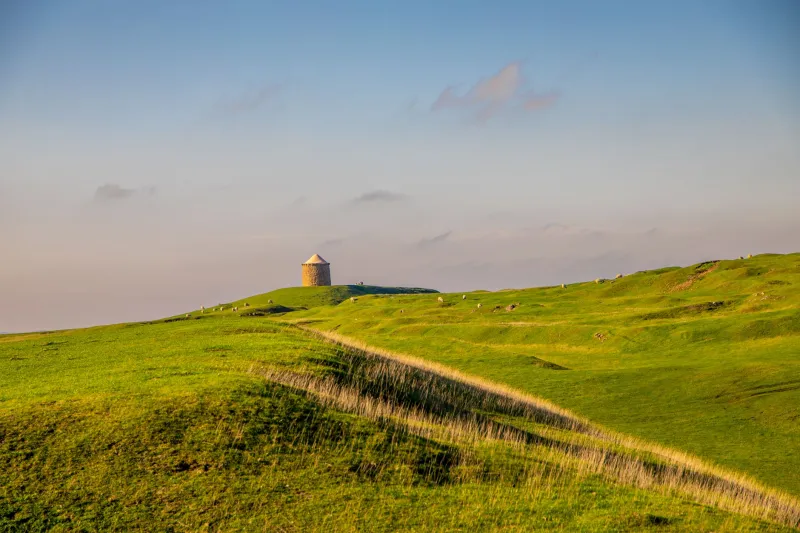
There is a particular kind of British genius that builds a castle and then forgets to put any rooms in it. Not through laziness, mind. Through choice. Somebody looked at a hillside, thought "what this needs is a 40-foot tower", and then built one with no staircase, no windows and no discernible function beyond being visible from the road.
We call these things follies, and we are quietly world-class at them.
What Actually Counts as a Folly?
The purist's definition is narrow: a building erected chiefly for decoration, where the money spent and the usefulness returned are gloriously out of proportion. No farming. No defence. No housing. Just a statement, a whim, an enormous stone shrug.
In practice, the category is a grab-bag. Ruins that were built ruined (fake decay, freshly crumbling, structurally sound). Towers that exist to be looked at rather than looked from. Sham castles with battlements and no garrison. Grottoes, hermitages, eyecatchers, banqueting houses so far from the house that the food arrived cold.
The unifying theme is this: a folly has to pretend. It dresses as something it isn't — a fortress, a ruin, a medieval relic — and everyone involved is in on the joke.
Spotting One on a Walk
You don't need a guidebook. You need a suspicious eye.
It's on a hill for no reason. A genuinely practical building sits near a road, a river or a quarry. A folly climbs to the top of a rise and then does nothing there but loom.
It's too small to be a castle and too big to be a shed. Two windows, one arch, no obvious door. Ask yourself who would live there. Nobody. That's the answer.
The stonework is a bit too neat for a ruin. Real ruins have rubble, slumping, weeds in the joints. Fake ones have tidy edges and grass that arrives on schedule.
It appears on the map without a name you can use. "The Tower", "The Folly", "Prospect House", "The Temple". Anything with a capital letter and no explanation is a strong candidate.
There's no path to it. Or, better, a path that stops twenty metres short, as though the builder lost interest at the last moment — which, in several cases, they probably did.
Five Worth the Drive
Broadway Tower, Worcestershire. The show-off of the Cotswolds, planted on a ridge where it can be admired from miles away. It has a genuine excuse — it was built as a signalling point — but its real job has always been looking marvellous, which it does without effort.
The Pineapple, Dunmore, Stirlingshire. A walled garden with a colossal stone pineapple on top of the entrance. There is no sensible sentence that follows that fact. Go in winter and it looks even odder, like a tropical fruit that has made a terrible decision about Scotland.
Ashton Memorial, Lancaster. Somewhere between a folly and a municipal outburst of grief, this domed confection sits above the city and makes everything below look like a model village. The scale is unreasonable. That's the point.
Clavell Tower, Dorset. A cylindrical tower that has spent its life staring out to sea, and which was famously moved inland in one piece when the cliff beneath it began to give up. Britain will happily spend millions to save a building that does nothing at all.
Beckford's Tower, Bath. Built by a man of enormous wealth and questionable judgement, now standing over a cemetery like a very expensive exclamation mark. The interior is a small, strange museum of a strange man's life. The view from the top is superb, which is arguably the only function it has ever had.
The Rules of Visiting a Folly
Do not ask what it was for. That is the fool's question, and the whole point is that nobody knows or cares.
Do photograph it from a distance first. Follies are designed to be seen from the next county, and close up they often reveal themselves as slightly awkward — lumpy masonry, odd proportions, a doorway that leads nowhere.
Do read the plaque. Folly builders were frequently rich, eccentric and desperate to leave a note explaining themselves. The note never quite explains anything, which is the funniest part.
Do not expect a café. Follies rarely have the footfall, and anyway a gift shop would be far too useful a thing to put in one.
Why We Keep Visiting Them
A folly is a building with its tie loosened. It exists because someone had money, land and an idea they couldn't quite justify, and decided to build it anyway. In a country that measures its history in parish churches, abbey ruins and castles with serious military pasts, there's something refreshing about a structure that simply says: because I wanted to.
So next time you're out on a walk and a tower appears on a hill with no road to it, no door in it and no explanation for it — don't walk past. Climb up. Stand there. Admire the sheer, magnificent pointlessness of it. It's the most British thing you'll do all weekend.